Locations
 Apply now


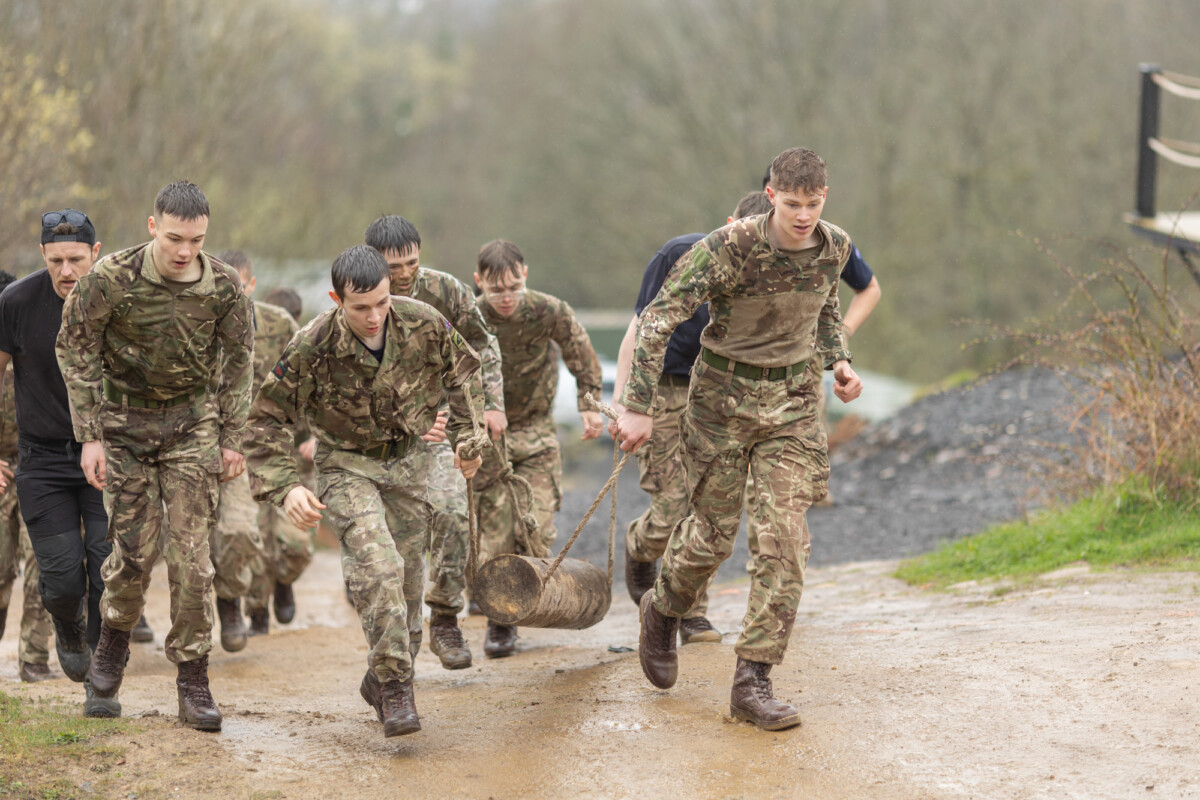
Basic training doesn’t care whether you’ve trained before – it cares whether your body can keep going when it’s tired, cold, and carrying weight. Most people need 8-12 weeks of consistent training just to hit baseline entry standards, and longer if you’re aiming for a physically demanding role like the infantry or Parachute Regiment. Before you get there, here are the five exercises worth building into your routine now.
- Running (interval and distance)
Whatever service or role you’re applying for, running underpins almost every fitness test – whether that’s a timed 1.5-mile run, a 2km run, or the multi-stage fitness (beep) test used across entry standards. Build both ends of your engine: one interval session a week (400m–800m repeats) for speed, one longer steady run to build endurance, and let your pace improve gradually rather than maxing out every session.
- Press-ups
Even where press-ups aren’t the official pass/fail test anymore, they remain one of the best builders of the upper-body strength and shoulder endurance you’ll rely on constantly – carrying kit, climbing obstacles, and general day-to-day training. Aim for controlled full-range reps rather than rushed half-reps; quality now saves you struggling later.
- Sit-ups and core work
A strong core protects your lower back under load – whether that’s a rucksack, a stretcher, or a jerry can – and supports almost every other movement on this list. Mix traditional sit-ups with planks and rotational core work to build the kind of all-round trunk strength basic training demands, not just a single test-day number.
- Pull-ups
Upper-body pulling strength doesn’t get tested as often as pressing strength, but it matters just as much for climbing, hauling, and general obstacle work. If you can’t do a full pull-up yet, build towards it with negative reps (slowly lowering from the top) and assisted variations – progress here tends to come faster than people expect with consistent practice.
- Loaded carries and rucking
This is the one most people skip – and the one that catches them out. Basic training involves moving with weight on your back over distance, so training that specific demand matters. Start with a light daysack over short distances and build up gradually in weight and distance. It’s unglamorous, but it’s often the single best predictor of how comfortable you’ll feel in training.
Train smart, not just hard
Exact fitness standards vary by service, role, and age group, and they do change over time so always check current official guidance for what you’re applying for. But building genuine strength, endurance, and load-carrying capacity across these five areas will put you ahead of most applicants on day one, whichever standard you’re being measured against.
You don’t have to prepare alone
This is exactly the kind of preparation MPCT builds into everyday training – structured fitness progression, honest guidance from instructors who’ve served, and support getting selection-ready rather than just turning up and hoping for the best.
Want structured support to get fit for basic training? Apply Now – MPCT to find your nearest MPCT academy.
Back to news articles